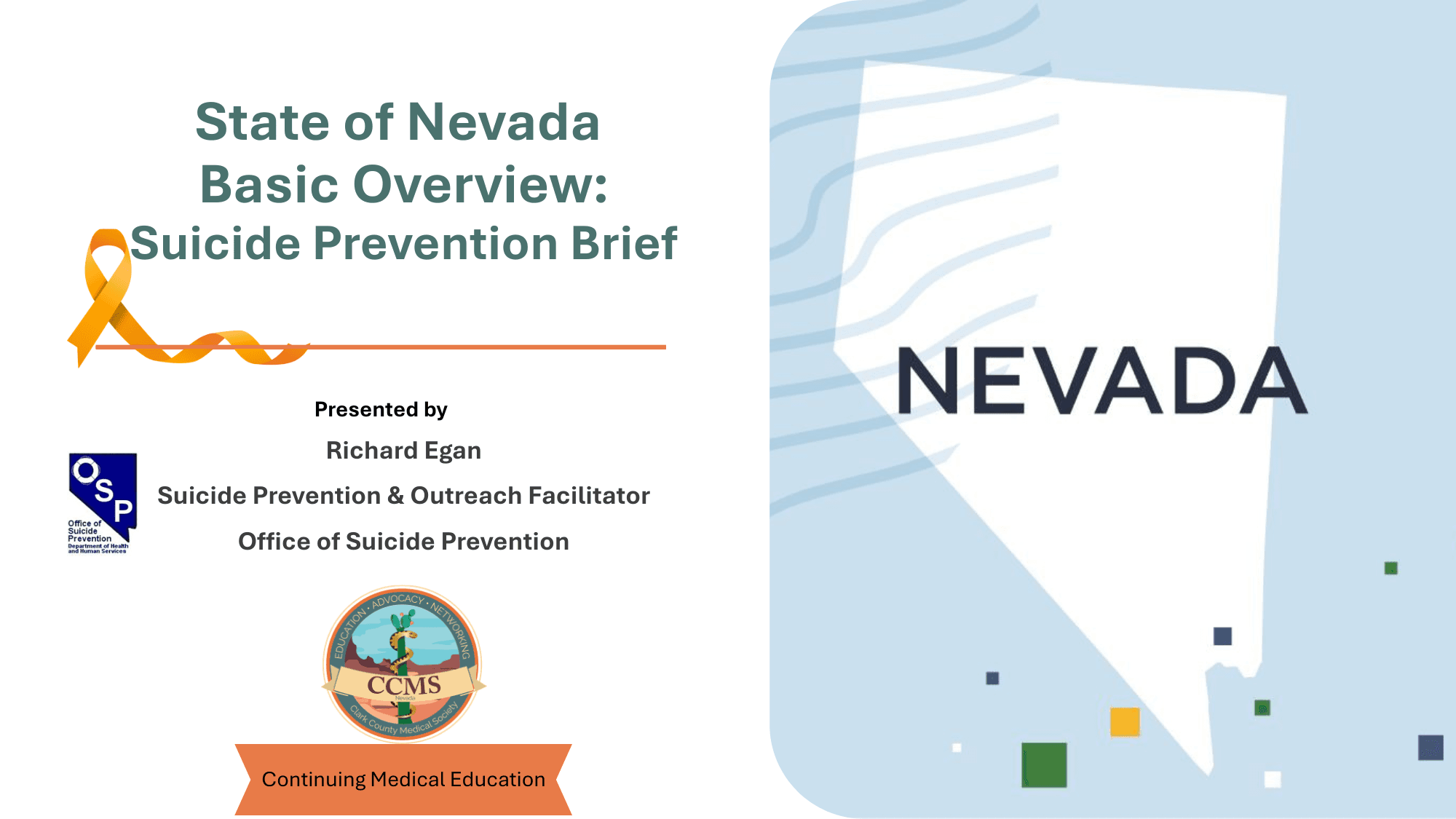
State of Nevada Basic Overview: Suicide Prevention Brief
0% Complete
Course Overview
This educational activity provides a foundational overview of suicide prevention in Nevada, highlighting suicide-related statistics, risk factors, warning signs, prevention initiatives, and available resources for individuals experiencing suicidal thoughts or those supporting someone at risk.
Presented by Richard Egan of the Nevada Office of Suicide Prevention, the presentation reviews national and Nevada-specific suicide data, including trends in suicide deaths and other relevant indicators. Participants will explore the history of suicide prevention efforts in Nevada, statewide initiatives, and recommendations from youth suicide death reviews to better understand prevention opportunities and areas for continued improvement.
The presentation examines recognized suicide risk factors and warning signs, emphasizing the importance of recognizing changes in behavior, feelings, and beliefs that may indicate an increased risk of suicide. It also addresses protective factors and resilience, including the role of social support, community connections, and access to appropriate resources.
Course Content
Credits
* AMA PRA Category 1™ credits are used by physicians and other groups like PAs and certain nurses. Category 1 credits are accepted by the ACCME, ARDMS, CCI, and Sonography Canada.
Course Details
- Duration
- 0.50 hour
- Released
- Oct 17, 2026
- Last Review
- Oct 17, 2026
- Expires
- Oct 17, 2029
Objectives
1. Describe current suicide trends and relevant suicide-related data in Nevada and their implications for suicide prevention efforts.
2. Identify common suicide risk factors, warning signs, and protective factors associated with suicide risk.
3. Summarize Nevada's statewide suicide prevention initiatives and the role of the Nevada Office of Suicide Prevention in coordinating prevention efforts.
4. Identify available suicide prevention, crisis intervention, and postvention resources, including the 988 Suicide & Crisis Lifeline.
5. Recognize opportunities to support suicide prevention through increased awareness, early identification of individuals at risk, and connection to appropriate resources.
Target Audience
Physicians, residents, medical students, and other healthcare professionals seeking to enhance their foundational knowledge of suicide prevention in Nevada, including suicide risk factors, warning signs, protective factors, statewide prevention initiatives, and available crisis intervention resources. The activity may also benefit healthcare professionals involved in patient care, community health, behavioral health, and suicide prevention efforts.
Faculty & Disclosure
Faculty
Richard Egan
Disclosure
Financial Disclosures
Neither the speaker nor any of the planners for this educational activity have relevant financial relationships to disclose with ineligible companies whose primary business is producing, marketing, selling, re-selling, or distributing products used by or on patients.
All of the relevant financial relationships listed for these individuals have been mitigated. Remaining persons in control of content have no relevant financial relationships.
This activity was developed without any financial support, influence, or involvement from any ineligible companies.
Accreditation and Credit Designation
The Clark County Medical Society is accredited by the Utah Medial Association (UMA) to provide continuing medical education for physicians.
The Clark County Medical Society designates this live educational activity for a maximum of 0.5 AMA PRA Category 1 CreditsTM. Physicians should claim only the credit commensurate with the extent of their participation in the activity.
Accreditation
The Clark County Medical Society is accredited by the Utah Medical Association (UMA) to provide continuing medical education for physicians.
The Clark County Medical Society designates this live educational activity for a maximum of 0.50 AMA PRA Category 1 Credits™. Physicians should claim only the credit commensurate with the extent of their participation in the activity.
Related Courses
Youth Suicide in Nevada: Current Trends, Clinical Risk, and Prevention